How to Behave in the Kingdom of Heaven
by Father Brian J. Soliven on Sunday February 1, 2026
Consider the scene upon that Galilean hillside, dear reader. There ascends a Man—not with tablets of stone borne heavily in His hands, as once did Moses upon Sinai amid thunder and smoke—but with words that burn more fiercely than any fire, words destined to be written not upon rock but upon the living tablets of human hearts.
In the old story, Moses climbed the mountain alone, veiled in cloud and terror, to receive the Law that would set a people apart. The Ten Words thundered forth, carving boundaries around conduct, marking what was holy from what was profane. They were good, those commandments; they were the very breath of God restraining the chaos of fallen man. Yet they stood external, like a fence around a garden we could not enter without stumbling.
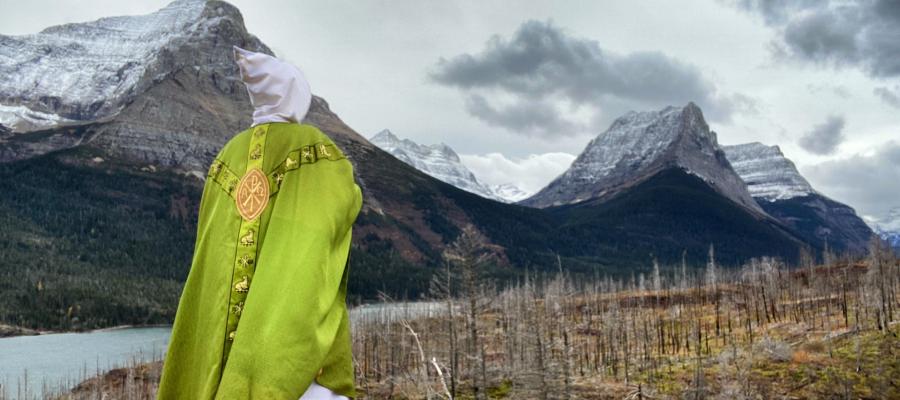
Now behold a greater ascent. Jesus of Nazareth goes up into the mountain, and the crowds follow, not in fear, but drawn by a strange authority that mingles majesty with meekness. He sits (as teachers do), yet speaks as One who needs no intermediary. Where Moses mediated between God and man, this Man is the mediation. Where Moses brought down stone inscribed by the finger of God, this Man brings down Himself – the living Word, the very finger of God made flesh.
He does not abolish the ancient Law; no, He fulfills it to its utmost depth. “You have heard that it was said... but I say to you.” With each repetition, the old commandment is not merely repeated but plunged into the hidden springs of the soul. Murder becomes anger unchecked; adultery becomes lust entertained; oaths become the simple honesty of “yes” and “no.” The Law, once a boundary line drawn upon the ground, is now revealed as a mountain peak we are called to scale but this, it's not by our own strength, but by the power of the One who has already reached the summit and beckons us upward.
And yet, who among us can hear these words without a secret shrinking? The Beatitudes pronounce blessing upon poverty of spirit, upon mourning, upon meekness; these qualities we possess only in fragments, if at all. The command to love enemies, to turn the other cheek, to be perfect as our Father in heaven is perfect strikes like a sledgehammer upon our self-sufficiency. We are not flattered; we are exposed. The mountain does not flatter the climber; it humbles him.
So let no one suppose the Sermon on the Mount is a counsel of despair. It is, rather, the map of joy. It is the narrow path that leads to life. In Christ, the old commandments find their fulfillment, and the new commandment of love becomes not a burden but a liberation. Ascend, then, with Him; listen to His voice upon the mountain; and find that the Lawgiver has become the Law fulfilled, the Teacher the Truth incarnate, the Moses greater than Moses, leading us home.