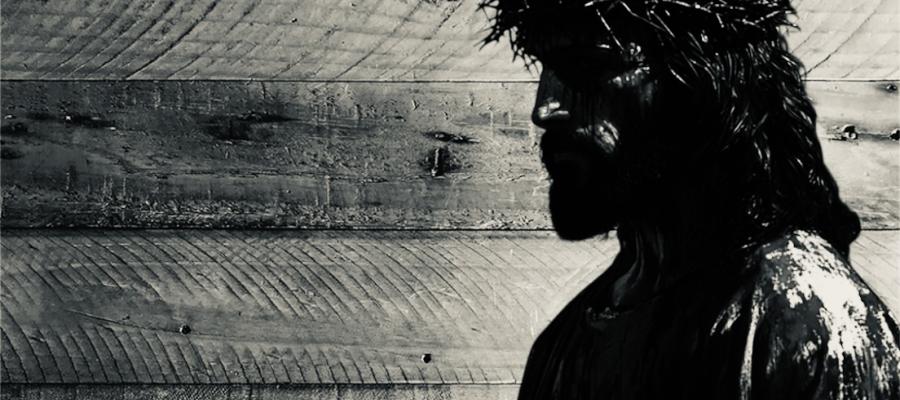
The First Time I Saw Jesus
by Father Brian J. Soliven on Sunday March 1, 2026
When you look at Jesus, what do you see?
It is a question that refuses to sit quietly in the corner of the mind. It presses forward. For to look at Jesus is not merely to observe a figure in history, nor to admire a moral teacher whose sayings decorate greeting cards. It is to stand before a Person who demands to be reckoned with.
Some see only a carpenter’s son: a man of dusty roads and rough hands, who spoke kindly to children and sternly to hypocrites. They see compassion, certainly; courage, perhaps; even genius. But nothing more. He becomes, in their sight, an admirable chap, someone nice and maybe wise.
But if you look longer, if you allow the Gospels to speak without interruption, you begin to notice something unsettling. The authority in His voice is not borrowed. He does not argue as though piecing together secondhand truths; He speaks as though Truth were His native tongue. He forgives sins as though they were committed against Himself. He commands storms as one might quiet a restless dog. He speaks of God not merely as Father, but as His Father, in a manner that places Him on the very side of the throne.
And then there is His humility.
Here lies the great stumbling block and the great splendor. For if He were merely divine in the sense of distant and untouchable, we might admire Him from afar and remain unchanged. But this is a divinity wrapped in swaddling clothes, kneeling to wash feet, sweating blood in a garden. It is a majesty that stoops. A glory that bleeds. If this is not God, it is blasphemy of the highest order. If it is God, then we are looking at the very heart of reality.
Can you see His divinity?
It is not always visible in the way lightning is visible. Often it is more like the sun behind a veil of clouds, perceived not by staring at it directly, but by the way everything else is illuminated. Stand near Him long enough and you begin to see yourself more clearly: your pride, your hunger, your longing for a love you cannot manufacture. His presence exposes and heals in the same breath.
To see His divinity is not merely to conclude that He is God. Even the demons, we are told, reached that conclusion. It is to behold in Him the startling claim that the Author of all things has written Himself into the story. That the Maker of the stars allowed nails to fasten Him to wood He Himself designed.
When you look at Jesus, you are not simply looking at an example. You are looking at an invasion—heaven breaking into earth, mercy interrupting rebellion, love refusing to remain abstract.
And here is the quiet wonder: the more clearly you see His divinity, the less crushed you feel by it. For this is not a cold omnipotence, but a wounded one. Not a tyrant’s power, but a shepherd’s. His divinity does not diminish His tenderness; it guarantees it.
So I ask again: when you look at Jesus, what do you see?
If you see only a teacher, you may admire Him. If you see only a martyr, you may pity Him. But if you see God—God with scars—then you will do something far more dangerous and far more glorious. You will worship.